Online Now 54
Visitors Since Launch 285
See Public Stats Datafast

All Dictators

Showing 45 profiles per page, ranked by public voting score.

D
#1
#1

Artur da Costa e Silva

Born: October 3, 1899 - President of Brazil during military dictatorship
Artur da Costa e Silva ruled Brazil during the military dictatorship and expanded authoritarian powers.
  • Military dictatorship rule.
  • Expansion of authoritarian powers through AI-5.
  • Censorship and political repression.
  • Suppression of democratic rights.
Upvotes 0
Downvotes 0
Score 0
D
#2
#2

Emílio Garrastazu Médici

Born: December 4, 1905 - President of Brazil during military dictatorship
Emílio Garrastazu Médici ruled Brazil during one of the harshest phases of its military dictatorship.
  • Military dictatorship rule.
  • Censorship and political repression.
  • Torture and state violence allegations.
  • Suppression of opposition and civil society.
Upvotes 0
Downvotes 0
Score 0
D
#3
#3

Juan Velasco Alvarado

Born: June 16, 1910 - Military ruler of Peru
Juan Velasco Alvarado ruled Peru after a military coup in 1968.
  • Military coup and authoritarian rule.
  • Suspension of democratic governance.
  • Restrictions on political opposition.
  • Military-led state control.
Upvotes 0
Downvotes 0
Score 0
D
#4
#4

Georgios Papadopoulos

Born: May 5, 1919 - Leader of the Greek military junta
Georgios Papadopoulos led Greece’s military junta after the 1967 coup.
  • Military coup and junta rule.
  • Suspension of democratic institutions.
  • Censorship and political imprisonment.
  • Torture and repression allegations.
Upvotes 0
Downvotes 0
Score 0
D
#5
#5

António de Oliveira Salazar

Born: April 28, 1889 - Prime Minister of Portugal
António de Oliveira Salazar ruled Portugal under the authoritarian Estado Novo regime.
  • Authoritarian Estado Novo rule.
  • Censorship and secret police repression.
  • Suppression of political opposition.
  • Colonial war and anti-democratic governance.
Upvotes 0
Downvotes 0
Score 0
D
#6
#6

Walter Ulbricht

Born: June 30, 1893 - Leader of East Germany
Walter Ulbricht built East Germany’s communist dictatorship and oversaw construction of the Berlin Wall.
  • Creation of a Soviet-style one-party dictatorship.
  • Suppression of dissent and opposition.
  • Berlin Wall construction and movement restrictions.
  • Secret police and surveillance-state policies.
Upvotes 0
Downvotes 0
Score 0
D
#7
#7

János Kádár

Born: May 26, 1912 - Communist leader of Hungary
János Kádár led Hungary after the Soviet suppression of the 1956 revolution.
  • One-party communist rule.
  • Repression after the 1956 Hungarian Revolution.
  • Political imprisonment and executions.
  • Suppression of opposition and dissent.
Upvotes 0
Downvotes 0
Score 0
D
#8
#8

Wojciech Jaruzelski

Born: July 6, 1923 - Military and communist leader of Poland
Wojciech Jaruzelski imposed martial law in Poland and led the communist regime.
  • Imposition of martial law.
  • Suppression of Solidarity movement.
  • Political imprisonment and censorship.
  • Military-backed communist rule.
Upvotes 0
Downvotes 0
Score 0
D
#9
#9

Erich Honecker

Born: August 25, 1912 - Leader of East Germany
Erich Honecker led East Germany under a communist one-party state and extensive surveillance system.
  • One-party communist rule.
  • Stasi surveillance state.
  • Restrictions on movement and Berlin Wall enforcement.
  • Suppression of dissent and censorship.
Upvotes 0
Downvotes 0
Score 0
D
#10
#10

Todor Zhivkov

Born: September 7, 1911 - Communist leader of Bulgaria
Todor Zhivkov ruled communist Bulgaria as its long-serving party leader.
  • One-party communist dictatorship.
  • Censorship and political repression.
  • Suppression of opposition and dissent.
  • Forced assimilation policies against minorities.
Upvotes 0
Downvotes 0
Score 0
D
#11
#11

Josip Broz Tito

Born: May 7, 1892 - President of Yugoslavia
Josip Broz Tito ruled socialist Yugoslavia through one-party communist authority.
  • One-party communist rule.
  • Suppression of political opposition.
  • Political imprisonment and repression allegations.
  • Restrictions on dissent and civil liberties.
Upvotes 0
Downvotes 0
Score 0
D
#12
#12

Fidel Castro

Born: August 13, 1926 - Prime Minister and President of Cuba
Fidel Castro ruled Cuba for decades as the leader of a one-party communist state.
  • One-party communist rule.
  • Suppression of political opposition.
  • Imprisonment of dissidents.
  • Restrictions on press freedom and civil liberties.
Upvotes 0
Downvotes 0
Score 0
D
#13
#13

Vladimir Lenin

Born: April 22, 1870 - Leader of Soviet Russia
Vladimir Lenin led the Bolshevik Revolution and established the first Soviet one-party state.
  • Creation of a one-party communist state.
  • Suppression of political opposition.
  • Red Terror and political repression.
  • Dissolution of democratic institutions.
Upvotes 0
Downvotes 0
Score 0
D
#14
#14

Ayub Khan

Born: May 14, 1907 - President and military ruler of Pakistan
Ayub Khan ruled Pakistan after a military coup and imposed martial law.
  • Military coup and martial law.
  • Centralization of political authority.
  • Restrictions on political parties and opposition.
  • Military-backed authoritarian rule.
Upvotes 0
Downvotes 0
Score 0
D
#15
#15

Yahya Khan

Born: February 4, 1917 - President and military ruler of Pakistan
Yahya Khan ruled Pakistan as a military dictator during the 1971 crisis.
  • Military dictatorship and martial law.
  • Suppression of political processes.
  • Military abuses during the 1971 Bangladesh crisis.
  • Authoritarian governance.
Upvotes 0
Downvotes 0
Score 0
D
#16
#16

Than Shwe

Born: February 2, 1933 - Chairman of Myanmar’s State Peace and Development Council
Than Shwe led Myanmar’s military junta for nearly two decades.
  • Military junta rule.
  • Suppression of pro-democracy movements.
  • Political imprisonment and censorship.
  • Human-rights abuse allegations.
Upvotes 0
Downvotes 0
Score 0
D
#17
#17

Ne Win

Born: May 24, 1911 - Military ruler of Burma
Ne Win ruled Burma after a 1962 coup and established military authoritarian rule.
  • Military coup and dictatorship.
  • One-party socialist military rule.
  • Suppression of opposition and protests.
  • Isolationist policies and economic decline.
Upvotes 0
Downvotes 0
Score 0
D
#18
#18

Chun Doo-hwan

Born: January 18, 1931 - President of South Korea
Chun Doo-hwan ruled South Korea after a military takeover and was linked to the Gwangju crackdown.
  • Military takeover and authoritarian rule.
  • Gwangju Uprising crackdown.
  • Censorship and repression of dissent.
  • Political imprisonment and rights abuses.
Upvotes 0
Downvotes 0
Score 0
D
#19
#19

Park Chung Hee

Born: November 14, 1917 - President of South Korea
Park Chung Hee ruled South Korea through military-backed authoritarian government.
  • Military coup and authoritarian rule.
  • Suppression of dissent and opposition.
  • Censorship and emergency rule.
  • Political imprisonment allegations.
Upvotes 0
Downvotes 0
Score 0
D
#20
#20

Chiang Kai-shek

Born: October 31, 1887 - Leader of the Republic of China
Chiang Kai-shek led the Republic of China and later ruled Taiwan under martial law.
  • One-party authoritarian rule in Taiwan.
  • Martial law and political repression.
  • Suppression of opposition movements.
  • White Terror period abuses.
Upvotes 0
Downvotes 0
Score 0
D
#21
#21

Ali Abdullah Saleh

Born: March 21, 1942 - President of Yemen
Ali Abdullah Saleh ruled Yemen for decades through patronage, security control, and authoritarian politics.
  • Long-term authoritarian rule.
  • Corruption and patronage allegations.
  • Suppression of opposition.
  • Security-force abuses during unrest.
Upvotes 0
Downvotes 0
Score 0
D
#22
#22

Ruhollah Khomeini

Born: May 17, 1900 - Supreme Leader of Iran
Ruhollah Khomeini became Iran’s first Supreme Leader after the 1979 revolution.
  • Theocratic authoritarian rule.
  • Suppression of political opposition.
  • Mass executions and political imprisonment allegations.
  • Restrictions on civil liberties and expression.
Upvotes 0
Downvotes 0
Score 0
D
#23
#23

Hafez al-Assad

Born: October 6, 1930 - President of Syria
Hafez al-Assad ruled Syria for three decades under Ba’athist authoritarian control.
  • Authoritarian Ba’athist rule.
  • Suppression of political opposition.
  • Security-state repression.
  • Violent crackdowns including the Hama massacre.
Upvotes 0
Downvotes 0
Score 0
D
#24
#24

Ahmed Sékou Touré

Born: January 9, 1922 - President of Guinea
Ahmed Sékou Touré ruled Guinea as a one-party authoritarian leader.
  • One-party authoritarian rule.
  • Political imprisonment and repression.
  • Suppression of opposition parties.
  • State control and forced exile of critics.
Upvotes 0
Downvotes 0
Score 0
D
#25
#25

Sani Abacha

Born: September 20, 1943 - Military Head of State of Nigeria
Sani Abacha ruled Nigeria as a military dictator from 1993 to 1998.
  • Military dictatorship.
  • Suppression of political opposition.
  • Execution and repression of activists.
  • Large-scale corruption allegations.
Upvotes 0
Downvotes 0
Score 0
D
#26
#26

Siad Barre

Born: October 6, 1919 - President of Somalia
Siad Barre ruled Somalia as a military dictator after a 1969 coup.
  • Military coup and dictatorship.
  • Suppression of opposition.
  • Human-rights abuses and clan-based repression.
  • Authoritarian one-party control.
Upvotes 0
Downvotes 0
Score 0
D
#27
#27

Mengistu Haile Mariam

Born: May 21, 1937 - Chairman of Ethiopia’s Derg regime
Mengistu Haile Mariam led Ethiopia’s communist military Derg regime.
  • Red Terror political repression.
  • Mass killings and imprisonment.
  • Military communist dictatorship.
  • Human-rights abuses during civil conflict.
Upvotes 0
Downvotes 0
Score 0
D
#28
#28

Hissène Habré

Born: August 13, 1942 - President of Chad
Hissène Habré ruled Chad and was later convicted of crimes against humanity.
  • Crimes against humanity conviction.
  • War crimes conviction.
  • Torture and political killings.
  • Authoritarian rule and repression.
Upvotes 0
Downvotes 0
Score 0
D
#29
#29

Francisco Macías Nguema

Born: January 1, 1924 - President of Equatorial Guinea
Francisco Macías Nguema ruled Equatorial Guinea as a highly repressive dictator.
  • Extreme political repression.
  • Mass killings and forced exile.
  • Destruction of state institutions.
  • Cult of personality and one-party rule.
Upvotes 0
Downvotes 0
Score 0
D
#30
#30

Jean-Bédel Bokassa

Born: February 22, 1921 - Emperor of the Central African Empire
Jean-Bédel Bokassa ruled the Central African Republic and later proclaimed himself emperor.
  • Military coup and personalist dictatorship.
  • Political repression and brutality.
  • Human-rights abuses.
  • Extravagant cult of personality.
Upvotes 0
Downvotes 0
Score 0
D
#31
#31

Porfirio Díaz

Born: September 15, 1830 - President of Mexico
Porfirio Díaz ruled Mexico for decades in the authoritarian period known as the Porfiriato.
  • Long-term authoritarian rule.
  • Election manipulation and political control.
  • Suppression of opposition and dissent.
  • Concentration of power during the Porfiriato.
Upvotes 0
Downvotes 0
Score 0
D
#32
#32

Juan María Bordaberry

Born: June 17, 1928 - President of Uruguay during civic-military dictatorship
Juan María Bordaberry dissolved Uruguay’s democratic institutions and ruled during the civic-military dictatorship.
  • Dissolution of democratic institutions.
  • Civic-military authoritarian rule.
  • Political imprisonment and repression.
  • Censorship and suppression of opposition.
Upvotes 0
Downvotes 0
Score 0
D
#33
#33

Anastasio Somoza Debayle

Born: December 5, 1925 - President and dictator of Nicaragua
Anastasio Somoza Debayle was the final ruler of Nicaragua’s Somoza dynasty.
  • Dynastic authoritarian rule.
  • National Guard abuses.
  • Political repression and corruption allegations.
  • Violent suppression of opposition.
Upvotes 0
Downvotes 0
Score 0
D
#34
#34

Anastasio Somoza García

Born: February 1, 1896 - President and dictator of Nicaragua
Anastasio Somoza García founded the Somoza family dictatorship in Nicaragua.
  • Authoritarian dynastic rule.
  • Use of National Guard power to suppress opposition.
  • Political repression and corruption allegations.
  • Consolidation of personal and family power.
Upvotes 0
Downvotes 0
Score 0
D
#35
#35

Fulgencio Batista

Born: January 16, 1901 - President and military ruler of Cuba
Fulgencio Batista ruled Cuba as an authoritarian leader before the Cuban Revolution.
  • Military coup and suspension of elections.
  • Political repression and censorship.
  • Corruption allegations.
  • Authoritarian military-backed rule.
Upvotes 0
Downvotes 0
Score 0
D
#36
#36

Hugo Banzer

Born: May 10, 1926 - Military ruler and President of Bolivia
Hugo Banzer ruled Bolivia as a military dictator from 1971 to 1978.
  • Military coup and dictatorship.
  • Suppression of political opposition.
  • Censorship and exile of critics.
  • Human-rights abuse allegations.
Upvotes 0
Downvotes 0
Score 0
D
#37
#37

Efraín Ríos Montt

Born: June 16, 1926 - Military ruler of Guatemala
Efraín Ríos Montt ruled Guatemala during a period of severe military repression.
  • Military coup and authoritarian rule.
  • Massacres during the Guatemalan Civil War.
  • Human-rights abuses against Indigenous communities.
  • Political repression and militarized governance.
Upvotes 0
Downvotes 0
Score 0
D
#38
#38

Jorge Rafael Videla

Born: August 2, 1925 - President of Argentina under military junta
Jorge Rafael Videla led Argentina’s military junta during the Dirty War.
  • Military coup and authoritarian rule.
  • Forced disappearances during the Dirty War.
  • Torture, political imprisonment, and extrajudicial killings.
  • Suppression of political opposition and civil society.
Upvotes 0
Downvotes 0
Score 0
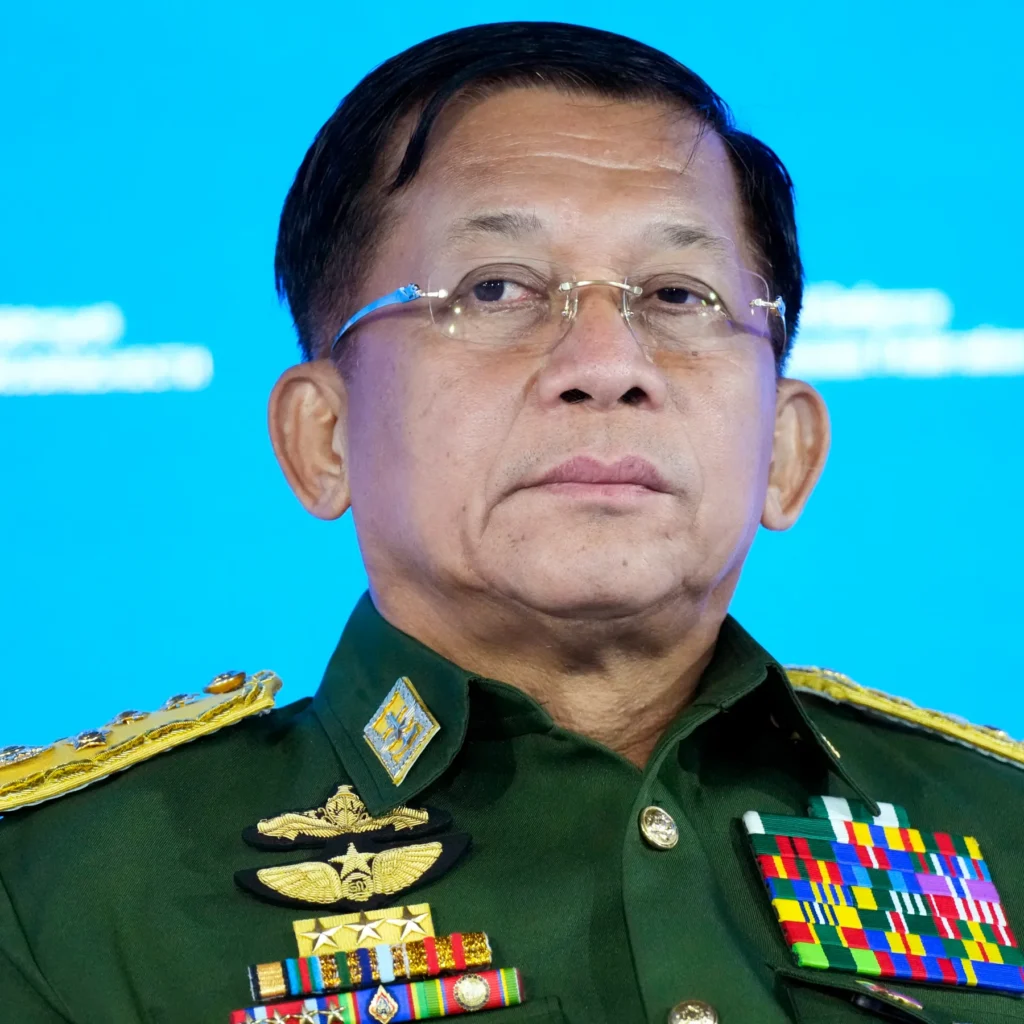
Min Aung Hlaing Dictator Profile #39
#39

Min Aung Hlaing

Born: July 3, 1956 - Chairman of Myanmar’s State Administration Council
Min Aung Hlaing is Myanmar’s military leader and led the 2021 coup that overthrew the elected government.
  • Military coup and overthrow of elected government.
  • Mass arrests and repression of protests.
  • Human-rights abuses reported by international organizations.
  • Military rule and suppression of democracy.
Upvotes 0
Downvotes 0
Score 0
D
#40
#40

Gurbanguly Berdimuhamedow

Born: June 29, 1957 - Former President and National Leader of Turkmenistan
Gurbanguly Berdimuhamedow dominated Turkmen politics after Saparmurat Niyazov and maintained a highly authoritarian system.
  • Severe restrictions on political rights.
  • Media control and censorship.
  • Personality cult and centralized rule.
  • Suppression of civil society.
Upvotes 0
Downvotes 0
Score 0
D
#41
#41

Daniel Ortega

Born: November 11, 1945 - President of Nicaragua
Daniel Ortega has ruled Nicaragua amid allegations of authoritarian consolidation and repression of opposition.
  • Suppression of opposition and civil society.
  • Media pressure and censorship allegations.
  • Political prisoner allegations.
  • Disputed elections and authoritarian consolidation.
Upvotes 0
Downvotes 0
Score 0
D
#42
#42

Nicolás Maduro

Born: November 23, 1962 - President of Venezuela
Nicolás Maduro leads Venezuela amid allegations of authoritarian rule, repression, and disputed elections.
  • Disputed elections and opposition restrictions.
  • Political repression allegations.
  • Media and civil society pressure.
  • Human-rights abuses reported by international organizations.
Upvotes 0
Downvotes 0
Score 0
D
#43
#43

Isaias Afwerki

Born: February 2, 1946 - President of Eritrea
Isaias Afwerki has ruled Eritrea since independence and leads one of the world’s most closed political systems.
  • No national elections under long-term rule.
  • Severe press freedom restrictions.
  • Indefinite national service reported by rights groups.
  • Suppression of political opposition.
Upvotes 0
Downvotes 0
Score 0
D
#44
#44

Alexander Lukashenko

Born: August 30, 1954 - President of Belarus
Alexander Lukashenko has ruled Belarus since 1994 and is often called Europe’s last dictator by critics and media.
  • Disputed elections and opposition suppression.
  • Crackdowns on protests and civil society.
  • Political prisoner allegations.
  • State control over media.
Upvotes 0
Downvotes 0
Score 0
D
#45
#45

Xi Jinping

Born: June 15, 1953 - General Secretary of the Chinese Communist Party
Xi Jinping is China’s top leader and has overseen increased party control, surveillance, censorship, and centralization of authority.
  • Censorship and suppression of political dissent.
  • Mass surveillance and social control.
  • Human-rights abuses reported in Xinjiang.
  • Restrictions on civil liberties in Hong Kong and mainland China.
Upvotes 0
Downvotes 0
Score 0
Previous Page 1 of 2 Next

Details